
From Classrooms to Clinics: WAU Student’s Transformative Journey in Peru
Sabdi Guimac, a biology major focused on pre-med at Washington Adventist University (WAU), recently returned from a transformative experience in Peru. She traveled with Advent Healthcare, an organization dedicated to providing medical services to underserved communities. Her role involved supporting a program aimed at improving total health in rural areas.
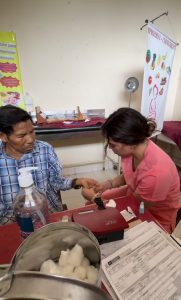
“I assisted at a free clinic near the river,” Guimac said. “We worked from 6 a.m. until noon, then walked to other communities to check for emergencies or people in need of medical care.” The clinic served six communities, but access to healthcare was limited, with only one facility available. Guimac spent a month assisting these remote locations.
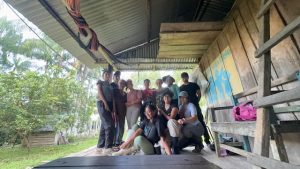
Guimac’s daily routine was structured. The team lived in a small house next to the clinic, waking up at 5 a.m. to complete their household duties. “We divided into groups—some cooked, others cleaned, and some brought water from the river,” she explained. By 6 a.m., the clinic doors opened, and a long line of patients awaited treatment. With only one nurse on staff and no doctors, the nurse handled all medical responsibilities. After clinic hours, Guimac and her team traveled by boat to other communities, visiting homes to assess residents’ health needs.
One moment that stood out for Guimac was the discovery of an elderly woman living in the forest. “We found her sleeping on the ground with no bed. Her body was infected with lice and sores,” she recalled. The team cleaned her wounds and arranged to bring a bed from the city. “It was heartbreaking to see her living in such conditions,” she added.
Although part of a larger organization, Guimac volunteered independently during her time in Peru. “I submitted my application, and the clinic director accepted me,” she said. The organization’s work in her home country made it a perfect opportunity for her to give back to her community.
While in Peru, Guimac also worked alongside a group of doctors from Colorado who performed free surgeries for the local population. “Acting as a translator for the doctors helped me improve my language skills, and my biology classes gave me a solid foundation to understand the injuries we were treating,” she said. Despite the technical skills she gained, Guimac emphasized that the most important lesson was learning empathy in healthcare.
Water quality was a significant issue in these areas. “They drank unfiltered water, which caused many health problems,” Guimac explained. To address this, her team distributed water filters to improve the local water supply.
Guimac’s motivation to volunteer stemmed from a long-held desire to help others. Having studied medicine for two years in Peru, she had always felt a calling to healthcare. “I wanted to do something that would change my life,” she said. “Helping people is the most meaningful thing I can do.”
The experience also had a profound impact on her spiritual life. Coming from a place where she had access to clean water and basic necessities, Guimac was struck by the scarcity faced by those she served. “Sometimes we only had rice and eggs to eat, but seeing how grateful the people were for the little help we provided changed my perspective,” she said. “Their smiles meant everything to me, and it strengthened my faith.”
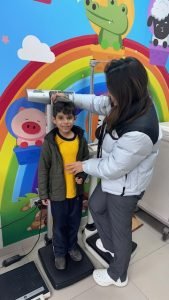
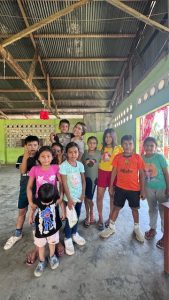
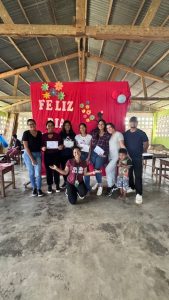
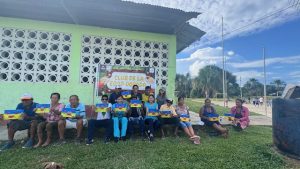
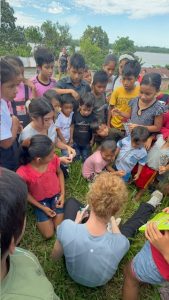
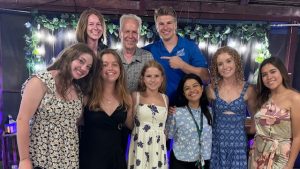
Some photos from her trip:
Guimac’s experience ties into WAU’s Biology Department mission, which equips students for careers in healthcare and research, emphasizing critical thinking and service. The department offers comprehensive training in biological sciences, supporting students like Guimac who seek to serve others through medicine (Washington Adventist University).