WAU Observes Constitution Day With Civic Dialogue, Worship, and Reflection
Written by: IMC Director Simonique Dietz
Washington Adventist University (WAU) commemorated Constitution Day with a program that blended student-led worship and a faculty panel discussion examining the enduring relevance of the U.S. Constitution.
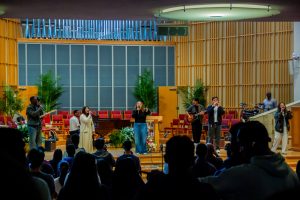
The morning service opened with music led by a student vocalist, including We Praise You and Do It Again. A student prayer of gratitude and intercession emphasized the day’s theme of thanksgiving: “Every day is an opportunity to draw closer to You…everything we have is a blessing because of You.”
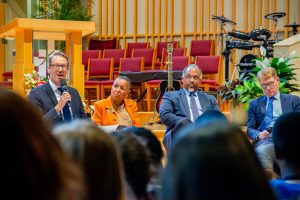
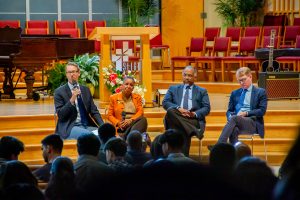
Dr. Jonathon Scriven, associate professor of history and political studies, served as moderator and framed the Constitution as both a safeguard of liberty and a guide to civic responsibility.
Provost Dr. Cheryl Kisunzu delivered a deeply personal testimony, reflecting on her upbringing in segregated Georgia. She described the resilience of her educator parents, who navigated school integration at personal risk, and emphasized the empowering symbolism of receiving her own new books rather than discarded ones. “Because of the pain, another possibility,” Kisunzu said, underscoring how perseverance and faith shaped her academic and professional journey.
Dean Christopher Banks, School of Arts and Social Sciences, placed the Constitution in historical perspective, calling it “an experiment” in rejecting caste systems and affirming equal citizenship. Citing the preamble’s charge to form “a more perfect union,” Banks described the Constitution as “a promise” that obligates each generation to hold government accountable.
Dr. Nicolas Miller, director of the Honors College and professor of history, emphasized the Constitution’s practical implications for contemporary society. Highlighting recent episodes of political violence, he urged balanced interpretation that avoids extremes of rigid originalism or unfettered progressivism. Miller cited the Ninth Amendment, which affirms rights not explicitly listed in the Constitution, as evidence of the founders’ intent for a flexible but principled framework. He described the document as a “living Constitution” rooted in founding principles yet adaptable to evolving contexts.
The panel collectively emphasized that constitutional protections apply broadly, extending to noncitizens as well as citizens. The discussion closed with a prayer for unity and peace, reflecting WAU’s commitment to integrating civic education with spiritual formation.
Through its Constitution Day observance, WAU combined worship, scholarship, and reflection — demonstrating the university’s dedication to nurturing students who are both thoughtful citizens and faith-driven leaders.
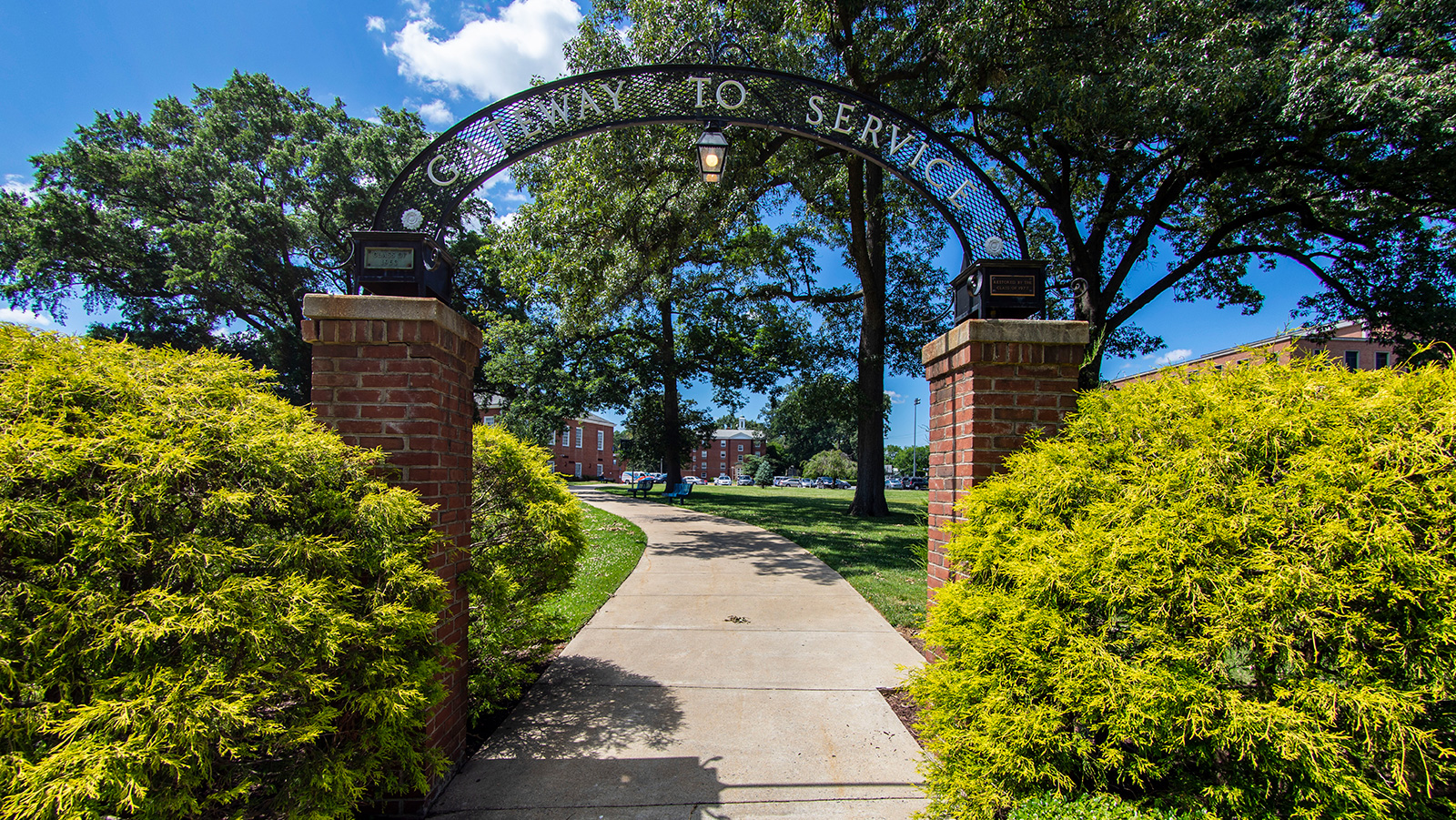
If you seek a Christ-centered education where academics cultivate purpose, worship fosters community, and service transforms lives, Washington Adventist University invites you to join the journey.